
INTERNATIONAL CONFERENCE: IMAGE-SPACE ENSEMBLES IN THE BAROQUE AGE. PERFORMATIVE FUNCTIONS, CURATORIAL PRACTICES, DIGITAL RECONSTRUCTIONS
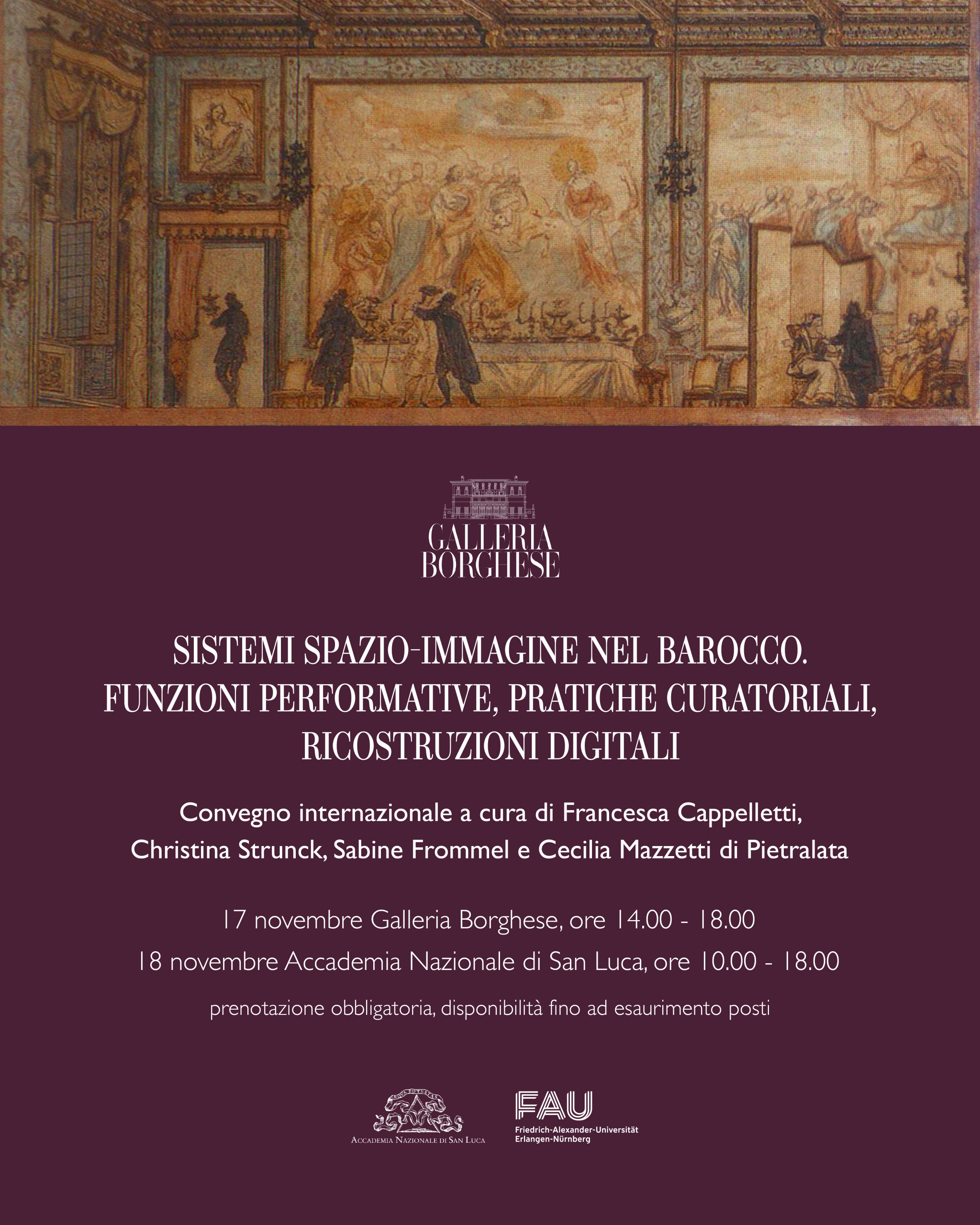
INTERNATIONAL CONFERENCE 17-18 NOVEMBER 2025
Galleria Borghese is organizing, in collaboration with the Institut für Kunstgeschichte of the Friedrich-Alexander-Universität Erlangen-Nürnberg and the Accademia Nazionale di San Luca, a two-day conference dedicated to the concept of the space-image system in the Baroque period, entitled Image-space ensembles in the Baroque Age. Performative functions, curatorial practices, digital reconstructions, curated by Director Francesca Cappelletti and Professors Christina Strunck, Sabine Frommel, and Cecilia Mazzetti di Pietralata.
The conference will take place in Rome on 17 November at Galleria Borghese (from 2:00 p.m. to 6:00 p.m.) and on 18 November at the Accademia Nazionale di San Luca (from 10:00 a.m. to 6:00 p.m.). The initiative aims to explore the concept of the space-image system, focusing on Baroque examples from various European countries. Over time, the sharp division between architectural history and the study of the visual arts has limited the number of research projects capable of systematically analyzing the interactions between architecture, the visual arts, and human presence in space.
In light of this, the project seeks to refocus attention on the relationship between image and space by examining two- and three-dimensional pictorial works within their spatial and historical contexts. The conference will address the aesthetic and performative aspects of space-image systems as well as current methodological challenges arising from the digital humanities and curatorial practice. The discussion will center on Baroque ensembles, a period in which architecture and iconographic programs were particularly closely intertwined.
The space-image ensembles of the Baroque era also represent a significant field of research, as they provided the settings for major diplomatic and ecclesiastical events of the seventeenth and eighteenth centuries. On one hand, they offered a visible expression of the political, religious, and social ideas of their patrons; on the other, they determined the forms and dynamics of the actions that took place within them. The study of these ensembles is therefore crucial not only for understanding Baroque aesthetics but also for gaining deeper insight into the broader cultural history of the seventeenth and eighteenth centuries.
In a dialogue that bridges disciplines, countries, and languages, the conference aims to systematically examine how architectural design and furnishings—both fixed and movable—of sacred and secular spaces enabled and, at the same time, shaped the intended performative functions. Another key area of discussion will address the potential and challenges of digital reconstructions of these complexes, as well as the role such projects play in curatorial practice and contemporary digital and museum mediation.
The ultimate goal is to contribute to the development of new standards of analysis and mediation that can do justice to the aesthetic, conceptual, and functional complexity of these intricate structures, thus fostering knowledge that extends beyond individual case studies.
To participate, you will be required to register at this link. Availability is limited and subject to capacity.
You can download the full program here.