
ZANABAZAR AT GALLERIA BORGHESE. FROM MONGOLIA TO GLOBAL BAROQUE
From 20 January to 22 February 2026, Galleria Borghese, in collaboration with the Museum of Oriental Art in Turin, will host two extraordinary works by the Mongolian artist Zanabazar, presenting an unprecedented dialogue between East and West under the sign of “global baroque.”
In the century of Gian Lorenzo Bernini, the absolute genius of European Baroque – sculptor, painter, and architect, whose ideal home is today Galleria Borghese thanks to the patronage of Cardinal Scipione Borghese – Asia, too, saw the rise of a figure of comparable stature: Zanabazar (1635–1723).
Born in the heart of the Asian steppe, within one of the largest empires ever built by humankind, Eshidorji belonged to the noble lineage of Genghis Khan. Renowned by his spiritual name, Zanabazar, he was recognized as Öndör Gegeen, “His Holiness the Enlightened One”: the first Khutuktu Jetsundamba, the title of the highest religious authority of the Gelug school of Tibetan Buddhism in Mongolia, venerated as the reincarnation of one of the original five hundred disciples of the Buddha.
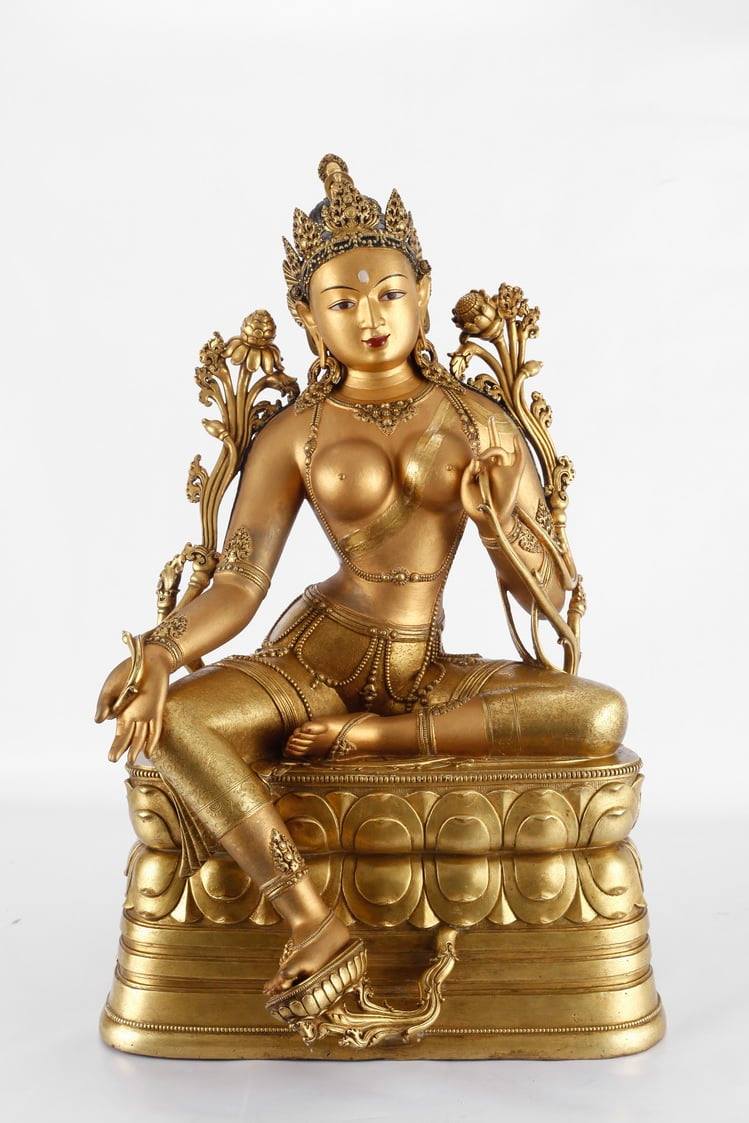
An exceptionally charismatic spiritual leader, Zanabazar was also a brilliant linguist and, above all, the greatest Mongolian sculptor of the early modern period. To him and to his disciples we owe works profoundly inspired by travels and periods of residence in Tibetan monasteries, revered as sacred objects in places of worship and in the temples he founded throughout Mongolia. Among these, the representations of the Taras stand out for their exceptionally high aesthetic value: female manifestations of the Buddha, deities associated with protection, liberation, and the inner states of being.
Zanabazar succeeded in spreading Buddhism in Mongolia on an unprecedented scale, making it accessible to ordinary believers. His aim was to create sculptures capable of speaking directly to the eye and the soul: natural, harmonious forms, “warm to the eye,” as the Mongols would describe them.
Bernini and Zanabazar left an indelible mark on their respective cultures, the former in Europe, the latter in Asia. Both inaugurated new artistic languages, developing innovative visions and unprecedented methods for reinterpreting traditional themes and subjects, creating models destined to profoundly influence subsequent generations. Two distant worlds, a single creative force capable of changing the history of art.
The two works on display – a refined Green Tara and a bronze sculptural self-portrait of Zanabazar himself enthroned – come from the Chinggis Khan National Museum in Ulaanbaatar and are presented to the public in a context of dialogue and comparison without precedent. For the first time, works by this artist reach Europe and Italy; for the first time in history, visitors to a Western museum can experience these presences and their aesthetic and formal contiguity with our own artistic heritage, bearing witness to a new and richly promising encounter.
The project ideally originates from the exhibition “Global Baroque. The World in Rome at the Time of Bernini” (4 April–13 July 2025), produced in collaboration with the Scuderie del Quirinale and curated by Francesca Cappelletti and Francesco Freddolini. That exhibition highlighted the profoundly transcultural character of seventeenth-century Rome, shaped by commercial exchanges, diplomatic relations, and the travels of artists and religious figures, revealing a dense network of connections that anticipated contemporary globalization.
Building on this insight, Galleria Borghese has developed a project without precedent, exploring the complexity of relationships between figures and artifacts seemingly worlds apart in historical, geographical, and technical terms, yet surprisingly close in creative spirit and in their ability to shape the future of the arts in these two remote regions of the world. This, too—and above all—is the spirit of “global baroque.” For the public, it is a unique opportunity: to admire works usually kept tens of thousands of kilometres away, brought together for the first time as expressions of a shared historical moment.