
BIOGRAPHY
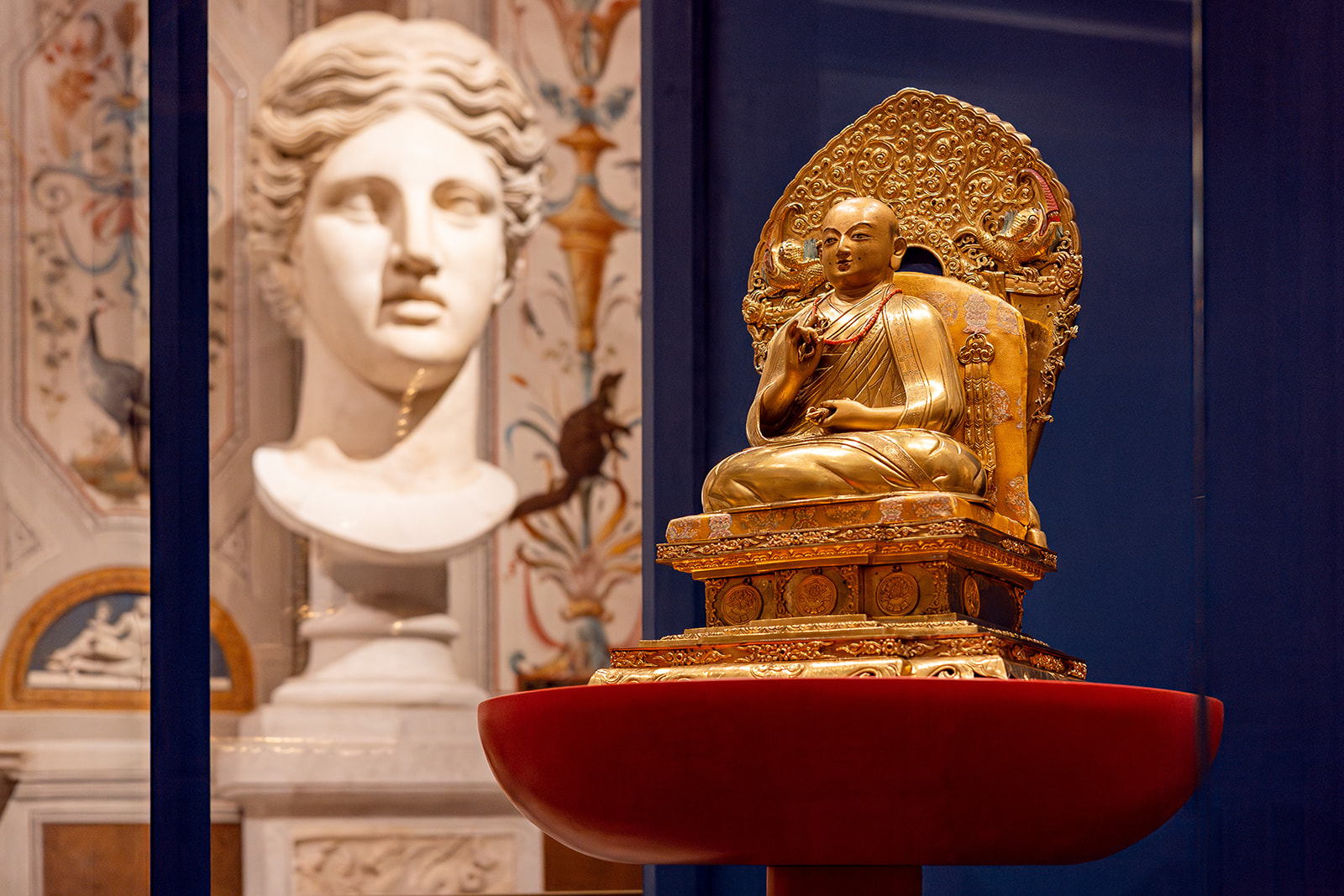
In 1635, approximately 80 kilometers southeast of the Erdene Zuu Monastery, Eshidorji, the great grandson of Abtai Sain Khan, was born. From an early age, he displayed exceptional intellectual abilities and a deep inclination toward religious study, demonstrating a remarkable familiarity with Tibetan prayers and an early interest in spiritual teaching.
In 1639, during an assembly of the Khalkha nobility, the child, then four years old, was formally proclaimed Öndör Gegeen (His Holiness the Enlightened One) and initiated into the first monastic order by Lama Jambal Bilig Nomun-khan. On this occasion, he received the name Zanabazar, known in Sanskrit as Jnanavajra, meaning “He Who Wields the Thunderbolt Scepter of Wisdom.”
At the age of fifteen, Zanabazar traveled to Lhasa to pursue advanced studies in Buddhism. There, the Fifth Dalai Lama officially recognized him as the reincarnation of Taranatha Gunga Ningbo (1575-1634), a renowned Tibetan scholar and writer. This recognition made Zanabazar the first Mongolian, and the sixteenth in the lineage of incarnate lamas, to receive the title of Javzan Damba Khutagt, marking a pivotal moment in the history of the seven Khalkha nations.
This historic event was celebrated with the enthronement of the first spiritual and political leader of Mongolia, the Bogd Gegeen, and the inauguration of the ceremonial Danshig Naadam festival.
After completing his studies, Zanabazar returned to Mongolia at the age of nineteen, accompanied by a group of Tibetan artists and learned lamas. In- vested with both religious and state authority, the First Bogd Gegeen devoted his life to the promotion of peace, knowledge, and the cultural and spiritual advancement of the Mongolian people. Under his leadership, monasteries were founded, temples were built, significant forms of sacred art were devel- oped, the Soyombo script was created, and major efforts were undertaken to translate and compose religious texts.
In a geopolitical context marked by regional tensions and rivalries, Zanabazar also sought to strengthen diplomatic relations with Tibet, Manchuria, and Russia, promoting dialogue and cooperation over conflict.
Zanabazar died in 1723. His vision, rooted in spirituality, artistic creation, and diplomacy, earned broad popular support, even as it stood in contrast to the ambitions of certain warrior elites who sought to restore Mongolia’s former military supremacy. Zanabazar’s legacy remains central to Mongolia’s cultural, religious, and artistic history.