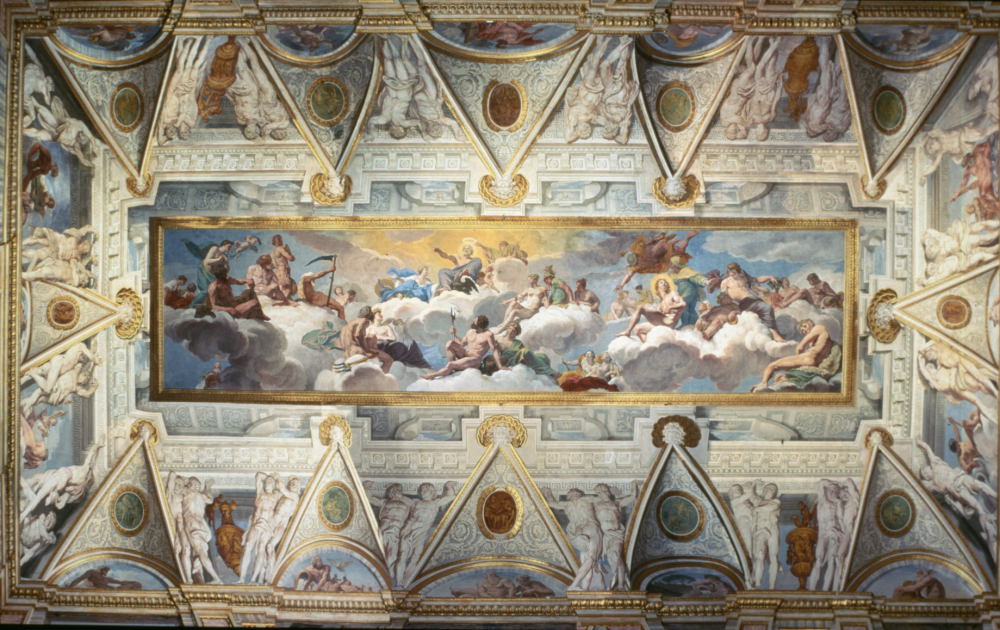
The room was originally conceived as a loggia open toward the secret gardens. However, in the second half of the eighteenth century, the space was enclosed to ensure the preservation of the vault fresco depicting the Council of the Gods, painted between 1624 and 1625 by Giovanni Lanfranco (1582-1647).
The Council of the Gods, along with the Assumption by Claude Deruet (1588-1660) in the chapel on the ground floor, constitutes the only surviving pictorial fragment of the seventeenth-century decoration of the villa, whose rooms were completely renovated in the following century on the initiative of Marcantonio IV Borghese.
The vast majority of the works preserved in the room also date back to the 17th century, exemplifying the two main pictorial trends of the early Seicento: on one hand, the revival of a classical style derived from the Carracci school, such as the four tondi by Francesco Albani (1578-1660) depicting The Adornment of Venus, Venus in Vulcan's Forge, Venus and Adonis, The Triumph of Diana, and the Landscapes by Giovan Francesco Grimaldi (1606-1680) and Giovan Battista Viola (1570/76-1622). On the other hand, the intense Caravaggesque naturalism is expressed by violent chiaroscuro contrasts, as seen in Lot and His Daughters by Giovanni Francesco Guerrieri (1589-1657), in The Prodigal Son by Giovan Francesco Barbieri, known as Guercino (1591-1666), and in the two representations of a Concert, by Gerrit van Honthorst (1590-1656) and Lionello Spada (1576-1622).
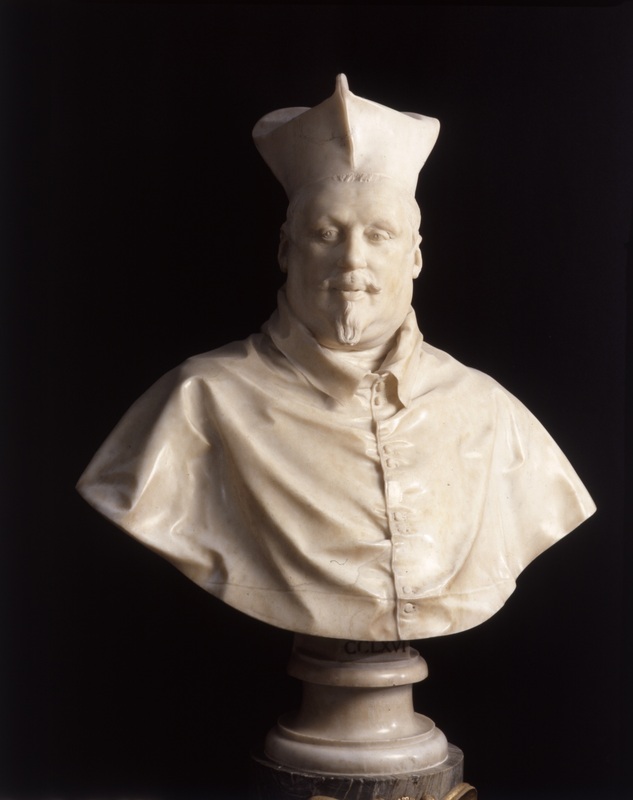
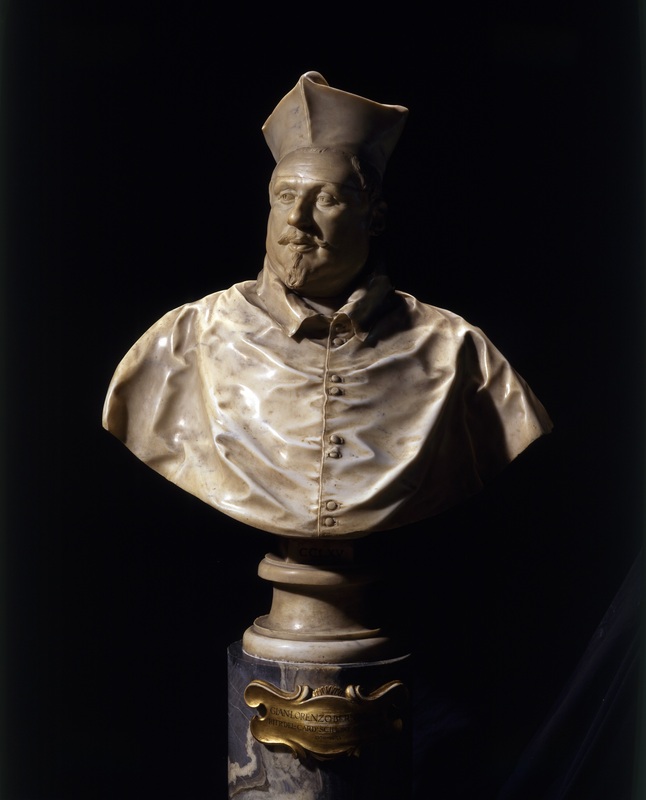
The room also preserves numerous works by Gian Lorenzo Bernini (1598-1680): the Bust of Paul V Borghese, the two famous versions of the Bust of Cardinal Scipione Borghese; the Goat Amalthea, an early work, and the terracotta sketch for the Equestrian Monument of Louis XIV, executed when the artist was over seventy. Three paintings by the same artist are also present: the Portrait of a Child, the Self-Portrait in Maturity, and the Self-Portrait as a Young Man.
bozzetto in terracotta per il Monumento equestre di Luigi XIV eseguito a più di settantanni. Sono presenti anche tre dipinti dello stesso artista, il Ritratto di fanciullo, l’Autoritratto in età matura e l’Autoritratto giovanile.