
INTRO
In the century of Gian Lorenzo Bernini (1598– 1680), supreme talent of European Baroque art, the figure of Öndör Gegeen Zanabazar (1635–1723) rose to prominence in Asia, equally prodigious.
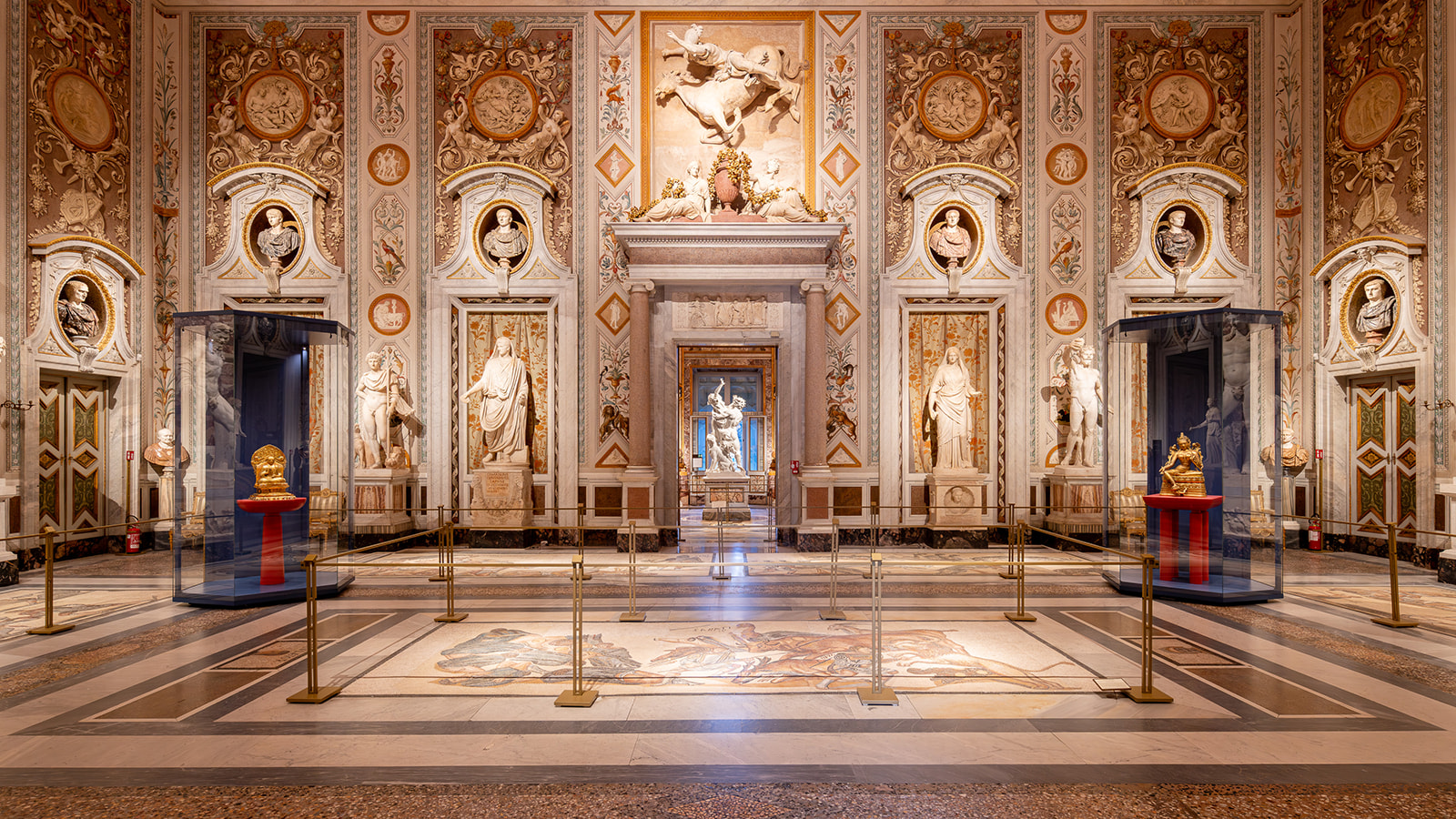
Born in the heart of the steppe, within one of the largest empires ever established by hu- mankind, Zanabazar belonged to the noble lineage of Chinggis Khaan and was an authority of exceptional spiritual charisma for Tibetan Buddhism in Mongolia, as well as a sculptor, linguist, mathematician, and poet. His very name“Thunderbolt Sceptre of Wisdom” evokes his stature. On the occasion of this exhibition, he comes to Europe, and Italy in particular, for the first time, presenting himself to the Western world in the entrance hall of the Villa Pinciana (before continuing his Italian tour at the Asian Art Museum of Turin) with one of his celebrated Taras and a youthful self-portrait, both cast in bronze.
Tara, the feminine manifestation of the Buddha, is a divinity associated with protection, liberation, and the inner states of being. A creation of the highest aesthetic value, she like Zanabazar’s composed and serene self-representation seeks an optical dialogue with Bernini’s impetuous marble, with the dizzying curves and dramatic contours of The Rape of Proserpina, visible beyond the threshold leading to the Hall of the Emperors. In this carefully constructed connection, the spiritual Asian bronzes and the warm Apuan stone establish an unprecedented and richly promising contiguity, proposing a further articulation of the Baroque as a global dimension of art and spirit.